Boeing Bird of Prey
Aerospace
21 January 2026
Introduction
The Boeing Bird of Prey was a highly classified "black project" technology demonstrator developed by McDonnell Douglas’s Phantom Works division (which later became part of Boeing) during the 1990s. Active from 1992 to 1999, the programme remained entirely obscured from public record until its declassification in 2002. Unlike typical experimental "X-planes" funded by the US government, the Bird of Prey was a privately funded venture, costing approximately $67 million.
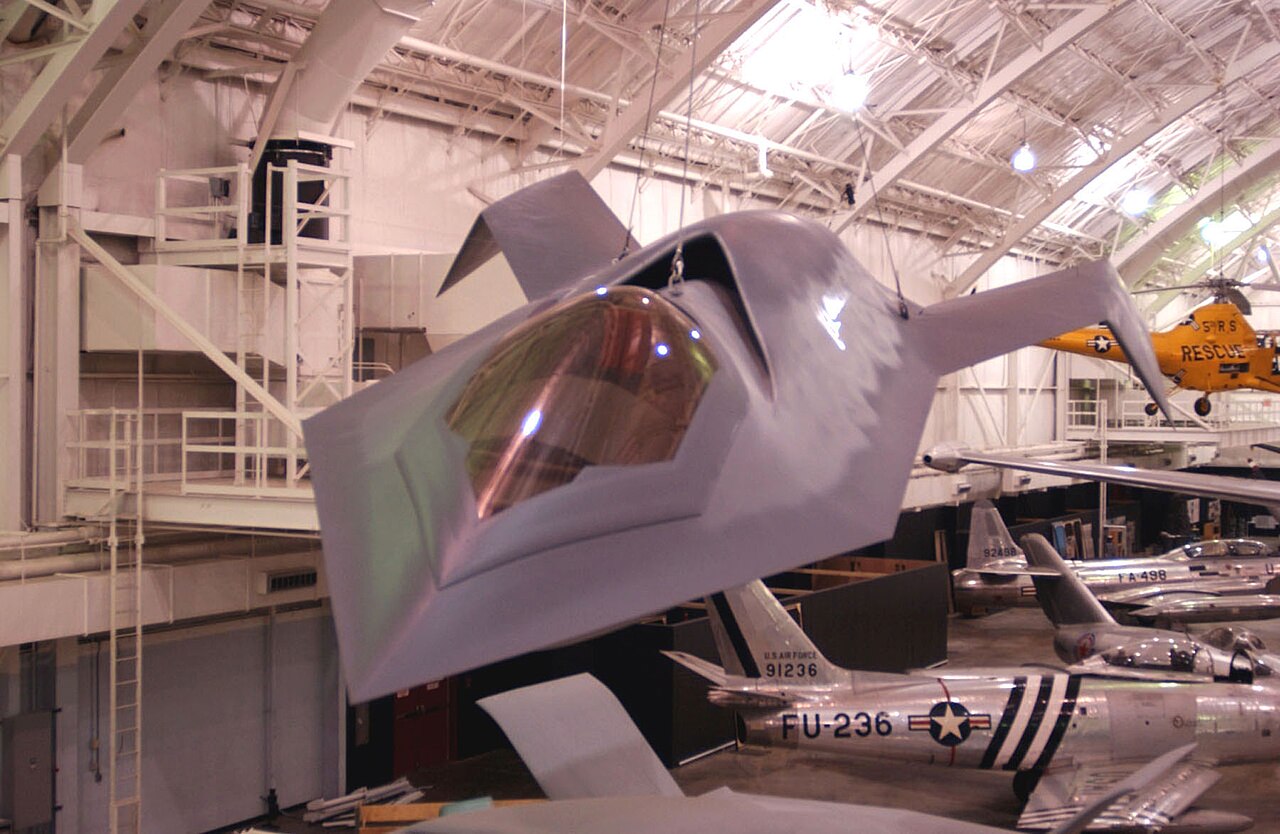
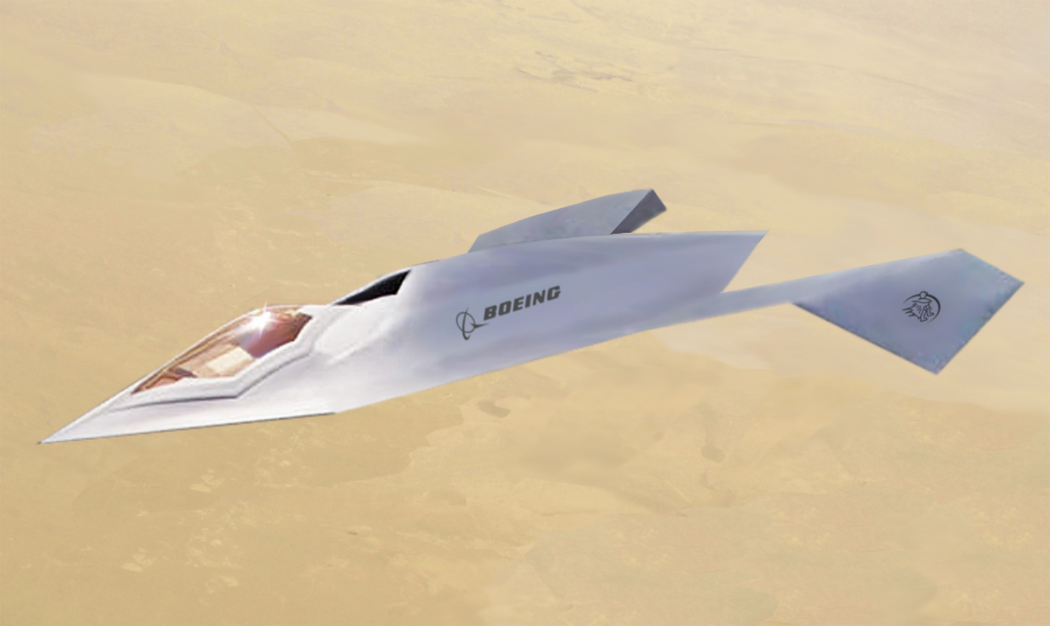
The aircraft was designed as a flying laboratory to validate three critical pillars of next-generation aviation: advanced low-observable (LO) shaping, rapid prototyping, and low-cost manufacturing. Its name, inspired by the Klingon vessel from Star Trek, reflects its radical, predatory geometry — a departure from the faceted surfaces of the F-117 Nighthawk in favour of the smooth, blended contours that now define modern stealth.
Objectives
The primary mission of the Bird of Prey was not to achieve high-speed combat performance, but to prove that cutting-edge stealth and manufacturing techniques could be developed quickly and affordably. Its specific technical objectives included:
• Low-Observable Validation: Demonstrating a "tailless" stealth airframe that could maintain stability without traditional vertical rudders or horizontal stabilisers.
• Affordability & Rapid Prototyping: Exploring the use of Commercial Off-The-Shelf (COTS) components to drastically reduce the development cycle and budget.
• Digital Engineering Integration: Pioneering the use of 3D virtual reality (VR) design tools and large-scale, single-piece composite structures to streamline assembly.
• Visual Stealth Research: Testing "active camouflage" concepts, including specialised paint schemes and surface treatments designed to mask the aircraft's silhouette against varying sky conditions.
Assessment
1. Technical Specifications and Flight Performance
The Bird of Prey was a single-seat, subsonic aircraft powered by a single Pratt & Whitney JT15D-5C turbofan, an engine typically found in business jets like the Cessna Citation.
Specifications:
• Length: 14.3 metres (47 ft)
• Wingspan: 7.0 metres (23 ft)
• Max Take-off Weight: 3,356 kg (7,400 lbs)
• Operational Speed: 418 km/h (260 knots / 300 mph)
• Service Ceiling: 6,096 metres (20,000 ft)
While its performance was modest — slower and lower than many general aviation aircraft — its aerodynamic purpose was to test stability. Despite its unconventional shape, the aircraft was aerodynamically stable enough to use manual hydraulic controls rather than the complex fly-by-wire (FBW) systems usually required for stealth platforms.
2. Structural and Stealth Innovations
The airframe featured several "industry firsts" that have since become standard in fifth-generation fighters and Unmanned Combat Air Vehicles (UCAVs):
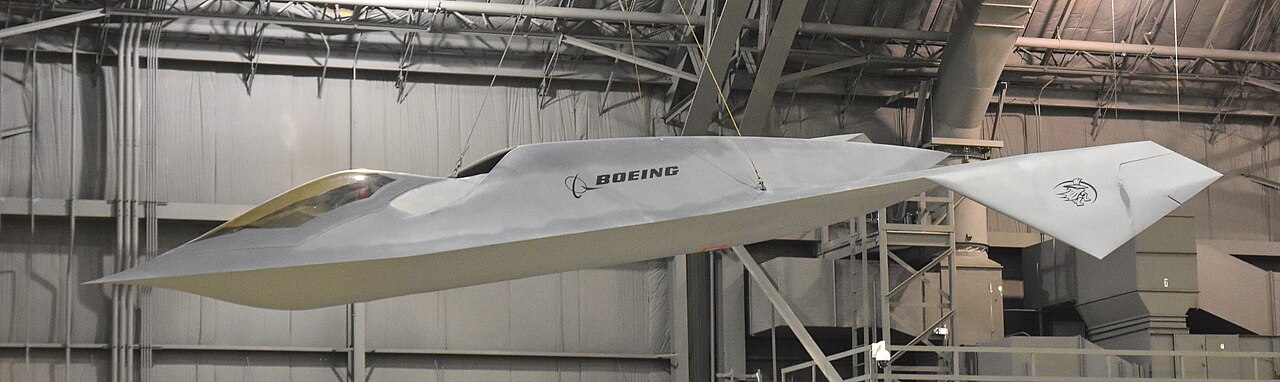
• Gapless Control Surfaces: To minimise radar reflections, the elevons and "rudderons" were designed to blend seamlessly into the wing, eliminating the radar-reflective gaps found on traditional hinged surfaces.
• Shielded Dorsal Intake: The engine intake was positioned on the spine of the aircraft, completely shielded from ground-based radar by the fuselage. This also buried the highly reflective engine fan blades deep within an S-duct.
• Composite Manufacturing: The aircraft was one of the first to employ large, single-piece composite panels. Boeing utilised disposable tooling (inexpensive moulds) and 3D computer-aided design to ensure parts fitted perfectly the first time, eliminating the "trial and error" phase of traditional prototypes.
3. Low-Cost Strategy
The $67 million price tag — exceptionally low for a stealth programme — was achieved through aggressive scavenging of existing parts:
• Landing Gear: Adapted from Beechcraft King Air and Queen Air aircraft.
• Ejection Seat: Sourced from a McDonnell Douglas AV-8B Harrier.
• Cockpit Controls: Utilised existing hardware from various tactical jets.
Conclusion
The Boeing Bird of Prey was an unequivocal success as a technology demonstrator. Over the course of 38 test flights, it validated that smooth, blended shaping could achieve a radar cross-section (RCS) comparable to a mosquito, while proving that digital design could bypass the need for expensive, multi-stage physical prototyping.
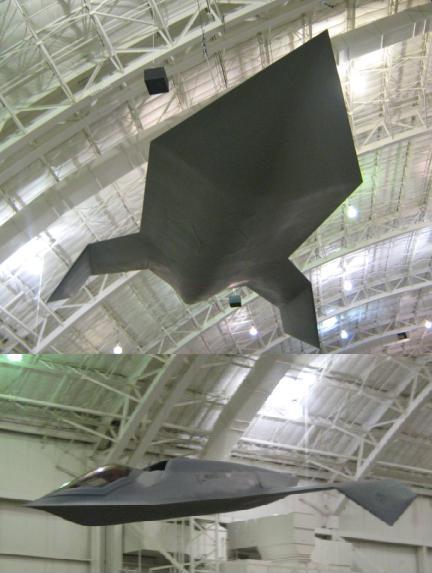
Its legacy is most visible in the Boeing X-45 UCAV, which inherited its tailless design and intake geometry, and the X-32 Joint Strike Fighter demonstrator. Furthermore, the "digital-first" philosophy pioneered by Phantom Works on this project laid the groundwork for modern initiatives like the Next Generation Air Dominance (NGAD) programme. By prioritising "cheap stealth" and manufacturing efficiency over raw flight performance, the Bird of Prey fundamentally shifted the paradigm of how the aerospace industry approaches the development of low-observable platforms.